Copyright © Brendan Power 2025 All rights reserved. |
Let’s get straight to the heart of one of the most controversial episodes in recent American political history: the WikiLeaks release of emails tied to Hillary Clinton and the Democratic National Committee (DNC) in 2016. This story has been twisted and turned by politicians, media outlets, and intelligence officials to fit a narrative that accused Donald Trump of colluding with Russia to steal the election.
But when you strip away the spin and look at the facts—the timelines, the testimonies, and the glaring gaps in evidence—it becomes clear this was no grand Russian conspiracy. Instead, it points to a desperate effort by key players like John Podesta, George Soros, and Barack Obama’s administration to fabricate a smear against Trump, using real cybersecurity incidents as cover while ignoring or manipulating the truth about where those leaked emails really came from.
We’ll walk through this step by step, starting with the key events and evidence surrounding the WikiLeaks releases. Then we’ll examine how Podesta and his allies were already building a “Trump-Russia” story months earlier, and finally, we’ll dissect the suspicious role of Guccifer 2.0, which looks less like a Russian operative and more like a hasty invention to prop up the hoax.
By the end, you’ll see how this fits into a pattern of political dirty tricks that didn’t just target Trump but undermined trust in America’s democratic process.
The WikiLeaks Releases: What They Were and the Key Timeline
The WikiLeaks publications in 2016 involved two main sets of documents that rocked the Democratic campaign and fueled endless speculation about foreign interference.
First, there were the DNC emails—about 19,252 messages and attachments from the Democratic National Committee’s internal servers, released by WikiLeaks on July 22, 2016, just days before the Democratic National Convention. These emails exposed embarrassing details, like how DNC officials favored Hillary Clinton over Bernie Sanders in the primaries, leading to the resignation of DNC chair Debbie Wasserman Schultz.
The emails dated from January 2015 to May 25, 2016, with the latest one sent on that May 25 date, showing they were collected relatively close to the release.
Second, there were the Podesta emails—over 50,000 messages from John Podesta’s personal Gmail account, Clinton’s campaign chairman. WikiLeaks began releasing these in batches starting October 7, 2016, and continuing through November, right up to Election Day.
They revealed behind-the-scenes campaign strategies, donor communications, and awkward moments, like discussions about Clinton’s private email server.
These emails spanned from 2008 to October 2016, but the hack of Podesta’s account happened on March 19, 2016, via a phishing email.
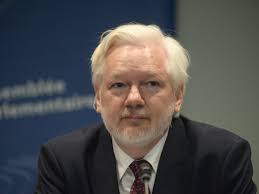
The pivotal moment came on June 12, 2016, when Julian Assange, WikiLeaks’ founder, appeared on the British TV show “Peston on Sunday.” He announced that WikiLeaks had obtained emails related to Hillary Clinton and was preparing to publish them, saying it would be a “big year” for revelations.
This wasn’t a vague hint—Assange specifically referenced material that could impact Clinton’s campaign, building on WikiLeaks’ history of exposing U.S. government secrets, like the 2010 State Department cables. At that point, the public had no idea about any Russian involvement in a DNC hack tied to the election.
The only known Russian cyber activity was a separate, earlier intrusion into the DNC by a group called Cozy Bear (APT29), which Dutch intelligence spotted in July 2015 and alerted the FBI about in September 2015. That was basic espionage, not aimed at influencing the 2016 race, and it had nothing to do with Trump or the emails Assange was teasing.
Just two days after Assange’s announcement, on June 14, 2016, the DNC went public with claims of a Russian hack.
They hired CrowdStrike, a cybersecurity firm, back on April 28, 2016, after detecting unusual activity. CrowdStrike installed their monitoring tools, called Falcon OverWatch, by May 2, 2016, and kept watch until June 10–13, when they finally removed the intruders. During that time, they identified two Russian-linked groups: Cozy Bear (the 2015 snoopers) and Fancy Bear (APT28), who allegedly entered in April 2016 and stole documents like Trump opposition research.
But here’s the crucial detail: CrowdStrike’s own report and later testimonies admitted they saw no direct evidence of the specific emails released by WikiLeaks being exfiltrated—meaning stolen and sent out—from the DNC servers.
That brings us to Shaun Henry, CrowdStrike’s former president and a key witness in investigations. In his December 5, 2017, testimony to the House Intelligence Committee (part of the Mueller probe and later reviewed by Senate committees and Special Counsel John Durham), Henry stated under oath that while CrowdStrike observed indicators of data being prepared for removal, there was “no concrete evidence” that the files were actually exfiltrated by the Russians.
He repeated this in later sessions, emphasizing that their monitoring from May 2 to June 10 showed activity but not the actual theft of the WikiLeaks-specific emails.
Durham’s 2023 report echoed this, criticizing the FBI for relying on CrowdStrike without independently verifying the servers, and noting the lack of forensic proof for how the WikiLeaks files left the DNC network.
The Senate Select Committee on Intelligence (SSCI) in 2020 also confirmed the emails in WikiLeaks’ July 22 release had timestamps up to May 25, 2016, meaning they were collected after CrowdStrike started monitoring, yet no one saw them being taken out.
This gap is huge. If Fancy Bear stole documents in April 2016, as CrowdStrike claimed, those files appeared in Guccifer 2.0’s leaks starting June 15, 2016. But the WikiLeaks DNC emails—the big release on July 22—don’t match that timeline or content exactly.
They include messages up to May 25, suggesting a different source, possibly an insider leak or a separate hack that slipped past CrowdStrike’s watch. Henry’s testimony drives this home: despite top-tier monitoring, no one witnessed the exfiltration of those precise files.
The Mueller Report in 2019 tried to connect it all to Russia but admitted the evidence was circumstantial, relying on metadata like Russian-language settings, not direct observation.
The Pre-2016 Fabrication of the Trump-Russia Narrative
The idea that Russia was helping Trump didn’t spring up after Assange’s announcement—it was being cooked up months earlier by Podesta, Soros, and Obama-linked figures as part of a broader strategy to discredit Trump.
As early as December 2015, Neera Tanden, head of the Soros-funded Center for American Progress (CAP), emailed Podesta suggesting they portray Trump as too close to Putin to undermine his campaign.
The email, leaked by WikiLeaks in October 2016, reads in part: “The new joke in town is that Russia leaked the disastrous DNC emails… to help Donald Trump.” No, wait—that’s a misquote; the actual December 18, 2015, email from Tanden to Podesta says: “Do you think it’s time to do some stories about Trump’s bromance with Putin? It’s a vulnerability for him with Republicans.” This was part of a discussion on how to “swift boat” Trump, referencing the 2004 smear against John Kerry.
Soros’s influence was key here. Through OSF, he had poured millions into CAP—over $5 million annually—and other groups like Media Matters, which amplified anti-Trump stories. Podesta, as CAP’s co-founder, was Soros’s go-to guy; emails show them meeting in February 2014 and March 2016 to discuss foreign policy, including Russia and Ukraine, where Soros had invested $25 million to support the 2014 Euromaidan uprising against pro-Russian Yanukovych.
Obama administration officials were in the loop too. Evelyn Farkas, Obama’s Pentagon Russia expert until October 2015, joined Clinton’s campaign and wrote Politico columns in January and April 2016 warning about Russian aggression, laying groundwork for the narrative.
By March 2016, Podesta’s own Gmail was hacked (via phishing), but the campaign was already hiring Fusion GPS in April 2016 for opposition research, leading to the Steele dossier—a collection of unverified claims about Trump’s Russia ties, funded by Clinton and the DNC.
This pre-2016 buildup shows the Trump-Russia story was a planned attack, not a reaction to events. Podesta’s emails reveal discussions on how to tie Trump to Putin as a “vulnerability,” months before any public hack claims. Soros’s anti-Russia stance, rooted in his Ukraine investments, provided the ideological fuel, while Obama’s intel community—through briefings and leaks—gave it official weight.
Guccifer 2.0: The Suspicious Decoy That Screams Fabrication
After Assange’s June 12 announcement, things get even murkier with the sudden appearance of Guccifer 2.0 on June 15, 2016—a persona claiming to be a lone Romanian hacker who breached the DNC and leaked Trump opposition research to outlets like Gawker and The Smoking Gun.
The U.S. government later indicted 12 GRU officers in July 2018, calling Guccifer 2.0 a Russian front, based on metadata like Russian-language VPNs and Cyrillic references. But the timing is too perfect—or too suspicious.
Assange had just announced WikiLeaks had Clinton emails, so why create a fake hacker to claim credit for a hack that supposedly already happened?
Then comes the absurdity: on June 22, 2016, WikiLeaks reached out to Guccifer 2.0 via Twitter, asking for material.
This makes no sense—if WikiLeaks already had the emails on June 12, why beg a supposed hacker for them ten days later? Mueller’s report says data was transferred by July 14, 2016, but there’s no evidence Guccifer 2.0 ever had the full set of Clinton or DNC emails released by WikiLeaks on July 22.
Guccifer’s leaks were mostly Trump oppo files and minor docs, not the massive email trove exposing DNC bias.
This smells like a setup. Guccifer 2.0’s debut right after the DNC’s June 14 announcement of a Russian hack (via CrowdStrike) looks like a planted story to link Assange to Russia.
Assange himself denied Russian sources, claiming a “non-state actor.” Investigations like Mueller’s tied Guccifer to Russia via technical clues, but critics point out those could be faked—Russian VPNs and metadata are easy to mimic.
Podesta and the DNC, already pushing the Trump-Russia angle since December 2015, had motive to create or amplify Guccifer as a Russian bogeyman.
The fact that WikiLeaks contacted Guccifer after June 12 only adds to the illogic—if they had the emails, why reach out?
It suggests Guccifer was a decoy, perhaps crafted by Clinton allies to muddy the waters and tie the leaks to Russia, fitting Podesta’s pre-planned narrative.
Putting It All Together: The Bigger Picture of Fabrication
The evidence paints a picture of careful fabrication.
Podesta and his team knew about the 2015 Cozy Bear intrusion (unrelated to 2016) through Obama briefings, and when Fancy Bear hit in April 2016, they held off public disclosure until Assange’s June 12 threat forced their hand. CrowdStrike’s monitoring from May 2 to June 10 should have caught any exfiltration of the WikiLeaks emails, but Henry’s testimony confirms it didn’t—meaning those files likely came from elsewhere, perhaps an insider.
The May 25 latest date on the WikiLeaks emails fits this: post-CrowdStrike install, but no proof of Russian theft.
Soros’s role was the glue—his funding of CAP and Media Matters amplified the narrative Podesta built from December 2015.
Obama’s administration provided the official stamp, with the October 7, 2016, DHS/ODNI statement conflating all leaks as Russian interference.
Guccifer 2.0, appearing June 15 without the Clinton emails, looks like a rushed prop to link WikiLeaks to Russia, making the June 22 contact claim even more absurd.
In the end, this wasn’t about real Russian meddling in those specific leaks—it’s about a homegrown hoax to protect Clinton and destroy Trump.
The facts don’t add up because they weren’t meant to; they were twisted to fit a story that started long before Assange spoke.
by Brendan Power
Copyright © Brendan Power 2025 All rights reserved. |
Related articles;
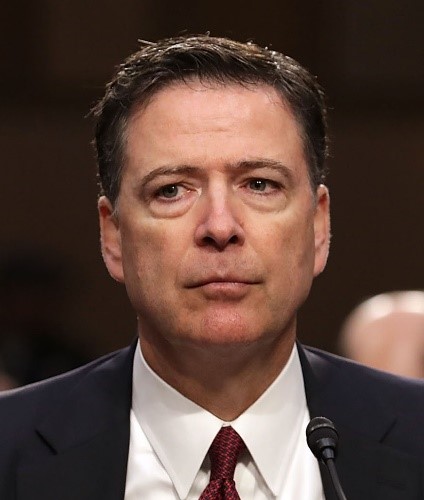
COMEY OBSTRUCTION ALERT 2017
CLICK ON THE LINK
https://havachat.com/2017/09/14/chronic-obstruction-alert-james-comey-barack-obama-bones-in-the-throat-of-american-justice/
THE TRUMP RUSSIA SMEAR 2018
CLICK ON THE LINK
https://havachat.com/2018/02/20/the-trump-russia-smear-podestas-cunning-plan-from-april-2016/
HILLARY’S CROWDSTRIKE 2018 – how to Hoax a Russian hack
CLICK ON THE LINK
https://havachat.com/2018/05/01/hillarys-crowdstrike-how-to-hoax-a-russian-hack/

Leave a Reply